

GM seen as unlikely to spend the money needed to retool the plant amid Canada's trade war with the United States, one industry veteran says.

The National Park Service, Pennsylvania officials, and other groups are working on an ambitious plan to create the Great Lakes Waterfront Trail in the United States. The U.S. trail would […]

By Anna Barnes
The Detroit River serves as an important geographic feature, connecting lakes St. Clair and Erie and creating a natural border between the U.S. and Canada. Despite its physical prominence in Detroit, its rich cultural significance is lost among many community residents. Programs are underway to address that disconnect.

Winter conditions in the Great Lakes are getting much shorter — by about two weeks fewer each decade since 1995

Regarding a micro-shelter plan, a Free Press reader asks: "Why do politicians feel good about spending taxpayers’ money in this manner?"

Free Press readers don't support the proposal of building a homeless shelter near Highway 401, saying the "middle of nowhere is not a solution."

Canada could be an attractive destination for highly educated people from abroad who can't afford a new $100,000 H-1B U.S. visa

Canada can't hope to lead in a vital global industry by shutting itself off from competition, a McMaster University prof says
By Eric Freedman
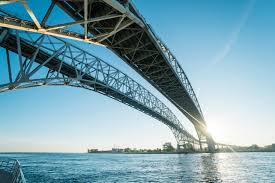
The iconic Blue Water Bridge has received a clean bill of operational health from the Michigan Auditor General’s Office. Based on its preliminary survey of procurement, fleet vehicles, employee training and toll transactions, the office said it saw no need to do a full performance audit of the bridge’s effectiveness and efficiency.
The post Busy Blue Water Bridge gets positive auditor general report first appeared on Great Lakes Echo.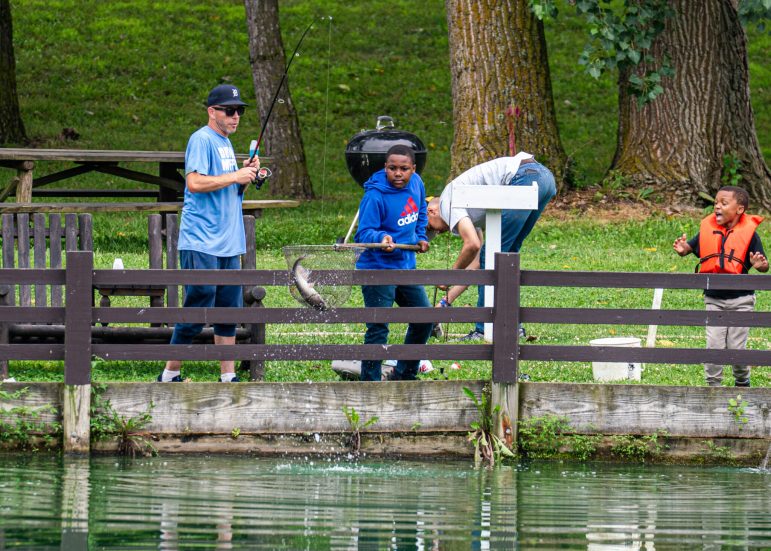
By Donté Smith
Despite being surrounded by the largest group of freshwater lakes on Earth, Michigan imports the vast majority of its seafood, between 65% and 90%, according to Michigan Sea Grant. As global aquaculture has grown to meet increasing demand for protein, a small but determined group of inland fish farmers in the Great Lakes region are building a more sustainable, local supply. Researchers say doing so could ease pressure on wild populations, create jobs in rural areas and help restore public trust in the food on their plates. But with high regulatory costs, limited consumer awareness and strong competition from imports, these farms face an uphill swim.
The post How inland fish farmers cultivate a sustainable future for the Great Lakes first appeared on Great Lakes Echo.
Henry Brzustewicz is on his way to becoming one of the best defencemen in the OHL this season.
London Free Press
Moira A. McDonald, Ann-Kathrin McLean Global attitudes towards the United States as a tourism destination are plunging. Travel pressures, exchange rate shifts and increasing economic uncertainty have all damaged the reputation of the American travel sector. Canadian travellers are increasingly turning to domestic destinations instead of heading south. In July, Canada recorded its seventh consecutive […]