

Ysni Semsedini talked about his vision for London Hydro in an interview with the Free Press.
Moving boats up and down through Erie Canal locks 34 and 35 in Lockport, New York used to take more than a dozen people 100 years ago; now, it’s a […]

From city events and dining to parks, entertainment, job opportunities and settlement supports, the app offers a wide range of resources.
Interlochen Public Radio
Cases in Benzie County, the Upper Peninsula and elsewhere demonstrate that small communities are not immune from big theft, and that the betrayal is deeply felt.
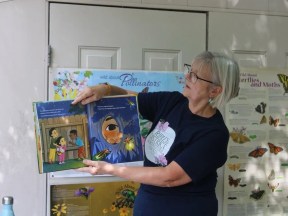
The For Our Youth (FOY) club had a special July meeting this summer. We were warmly welcomed to the beautiful native gardens at the home of Christine and Jim Roberts in Blair’s Grove. FOY doesn’t usually meet in July, due to the heat and vacation schedules, but we couldn’t resist Christine’s generous invitation to host […]
Interlochen Public Radio
There were 15 assaults on staff and another 25 on prisoners at the St Louis Facility, according to the union's report.
Interlochen Public Radio
The former Michigan governor worked through budget standoffs — and brief partial government shutdowns — in 2007 and 2009. She shares her thoughts.
Interlochen Public Radio
In 2014, a group of botanists discovered that a very rare plant native to the Kankakee River in Illinois, had vanished from its only known native habitat in the world. That set off a quest to bring back the missing Midwestern flower.

By Rachel Lewis
With the goal of cutting food waste by 50% from 2005 levels by 2030, The Michigan Department of Environment, Great Lakes and Energy (EGLE) has been helping to fund NextCycle Michigan. This program gives grants and advice to small companies in the state looking to reduce food waste. One of these start-ups is Penny Pickup. With robot food delivery vehicles becoming more popular, the company Orange Sparkle Ball decided to launch Penny Pickup as a pickup service, instead of delivery. Its focus is to remove trash and unwanted items, primarily food waste.
Great Lakes Echo
By Donté Smith
The Great Lakes, a vital freshwater expanse for millions, face an ongoing environmental crisis. Beneath the vast waters lies a significant threat: pollution stemming largely from agricultural runoff. This flow of excess nutrients like phosphorus and nitrogen contributes to harmful algal blooms and expanding “dead zones,” jeopardizing ecosystems, water quality and public health across the region. Amidst these challenges, Barn Sanctuary in Chelsea, Michigan, works to make a positive impact on the region. Tom McKernan, sanctuary co-founder and operations director, wants the farm to stand as a living model where animal welfare and ecological stewardship aren’t just compatible, but linked.
Interlochen Public Radio
n vacation hotspots, schools struggle to find teachers because housing is often well beyond their pay. A bill in Lansing aims to address that.

olstering the talents of local writers is exactly what an arts institution should be accomplishing during our current elbows-up era.